

Ask a Melbourne business owner what brings in customers and most will say word of mouth. Online reviews are word of mouth at scale: the first thing a prospect reads after finding you on Google and one of the three factors Google uses to decide which local businesses appear in the map pack. Yet most small businesses have a handful of reviews from years ago and no system for getting more. This guide explains why reviews matter for both trust and rankings, how to build a steady flow of Google reviews without breaking the rules, how to respond and what to do about the bad ones.
Why reviews matter more than most owners realise
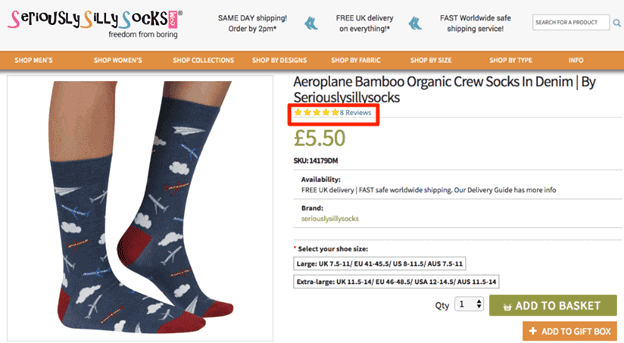
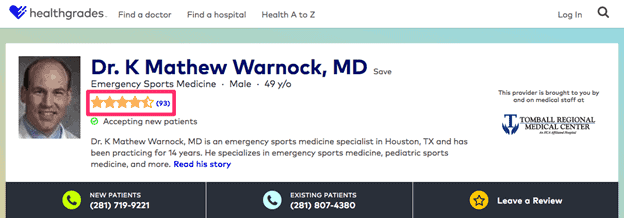
Reviews do two jobs at once. For the customer, they are proof. Someone choosing between three plumbers in Preston will call the one with 80 recent reviews at 4.8 stars before the one with 6 reviews from 2021, almost regardless of what the websites say. For Google, review volume, average rating and recency are prominence signals that directly influence local rankings; the businesses in the map pack for a given search almost always have more and more recent, reviews than the businesses just below them. Reviews also feed relevance: when customers mention the service and suburb in their review text (“fixed our hot water in Reservoir the same day”), that text helps the profile match those searches.
The rating itself matters less than people fear. A business at 4.6 with 120 reviews outperforms one at 5.0 with 9 and a few honest three-star reviews make the five-star ones believable. What kills trust is a profile that looks abandoned.
Where reviews should live
Google is the one that matters for local search and for most Australian consumers; concentrate there first. Facebook reviews help for businesses with a strong social presence. Industry platforms matter in some sectors: hipages and Oneflare for trades, Word of Mouth and ProductReview for retail and services, Healthengine or HotDoc for clinics, RateMyAgent for real estate. Once you have a good base on Google, pull the reviews onto your own website so they are visible to people who arrive from a referral rather than a search.
How to get more Google reviews, consistently
Ask at the right moment. The best time is when satisfaction is highest: the job is finished and the customer is pleased, the invoice is paid, the project is handed over, the appointment went well. Ask in person first (“would you mind leaving us a Google review? I’ll text you the link”), then follow up within the hour.
Make it one tap. Get your direct review link from your Google Business Profile (the “Ask for reviews” button gives you a short URL) and send it by text or email. Every extra step halves the response rate. A QR code on the invoice, the van or the front counter works well for walk-in businesses.
Make it a step in the process, not a favour. Add “send review link” to your job completion checklist or your booking software’s follow-up sequence. ServiceM8, Tradify, Cliniko, HotDoc and most CRMs can automate the message. Businesses that systemise this get five to ten times as many reviews as those who ask when they remember.
Ask everyone. Not just the customers you expect to be glowing. Selectively asking only happy customers (“review gating”) breaches Google’s policies and under Australian Consumer Law suppressing negative reviews while soliciting positive ones can be misleading conduct. The ACCC has taken action over exactly this. Ask everyone, respond to everything.
Never buy, trade or incentivise. Paid reviews, reviews from staff or family, discounts in exchange for reviews and review-swap groups all breach Google’s guidelines and consumer law and Google’s detection is good enough that profiles get reviews removed or suspended. The short-term bump is not worth the risk to the one asset you cannot rebuild quickly.
Responding to reviews
Respond to every review, positive and negative, within a few days. For positive reviews, a short specific thank-you that mentions the job (“Thanks Sarah, glad the new switchboard in Bundoora is working well”) reads as human and quietly adds relevant text to your profile. For negative reviews, reply calmly, acknowledge the specific issue, say what you did or will do about it and take the detail offline. You are writing for the hundred prospects who will read the exchange, not for the one reviewer. Never argue, never reveal private details and never respond angry; sleep on it if you need to.
If a review is fake or breaches Google’s policies (not a real customer, contains hate speech, is about a different business), flag it through your profile and, if that fails, through Google’s review management tool. Be realistic: Google rarely removes a genuine negative review just because you disagree with it.
Putting reviews to work
Once you have them, use them. Embed your Google reviews on your website’s home page and service pages, near the enquiry form and phone number, with a plugin that pulls them live. Quote specific reviews on the service page they relate to. Use them in proposals and on social media. Mention your rating in your Google Ads. And read them: reviews are free customer research and patterns in what people praise or complain about tell you what to fix and what to sell harder.
A simple review system you can start this week
Get your direct review link and save it in your phone and your job software. Add “ask for review and send link” as the last step of every job. Set a reminder to respond to reviews twice a week. Put a QR code on your invoices. Aim for at least two new Google reviews a month at first, more for high-volume businesses. Within six months you will have a profile that looks like the busiest business in the suburb, because it will be.
Frequently asked questions
How many Google reviews does a small business need?
More than the competitors currently in the map pack for your main search, with comparable ratings and more recent dates. Check what they have and set that as the first target. For most suburbs that is somewhere between 30 and 100.
Is it legal to ask customers for reviews in Australia?
Yes. What is not allowed is offering incentives, only asking customers you expect to be positive, posting fake reviews or suppressing genuine negative ones. The ACCC treats those as misleading conduct.
Can I offer a discount for a review?
No. It breaches Google’s guidelines and can breach Australian Consumer Law, even if you do not ask for a positive review specifically.
What should I do about a fake negative review?
Flag it through your Google Business Profile with a short factual explanation, respond publicly and calmly noting that you have no record of the customer and escalate through Google’s review management tool if it is not removed. Do not engage in a back-and-forth.
Do reviews affect Google rankings?
Yes. Review volume, rating and recency are part of the prominence signal in local ranking and review text helps your profile match relevant searches. Our local SEO guide covers how reviews fit with the other factors.
Should I put reviews on my website?
Yes. Pull live Google reviews onto your home page and service pages near the enquiry form, so the proof is there for visitors who arrive from a referral rather than a search.
Reviews are the cheapest, most durable marketing a local business can do and the only cost is building the habit. If you would like your Google Business Profile set up properly and reviews embedded on your site, get in touch.